

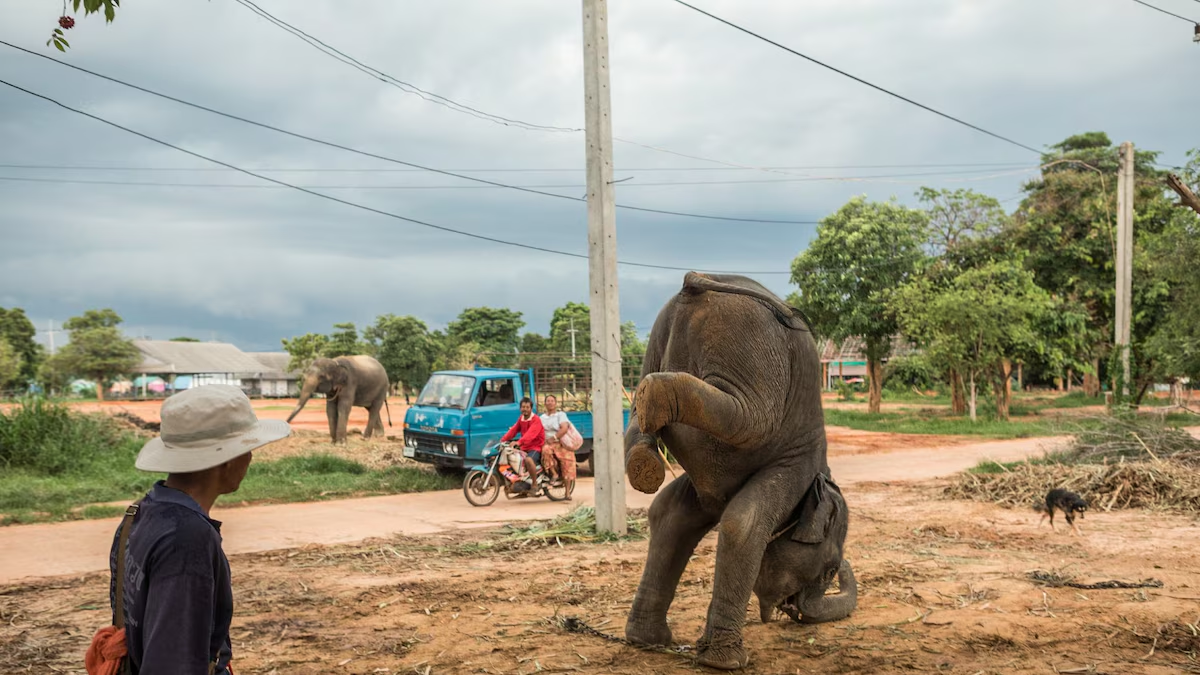
As a responsible and animal-conscious traveler, my journey through Asia led me to explore the often-recommended elephant-related activities. I had always dreamt of getting up close and personal with these majestic creatures, but I couldn’t ignore the nagging doubts that haunted my conscience. Before I jumped onto an elephant’s back, I decided to delve deeper into the world of elephant tourism in Thailand.
My exploration began in Ayutthaya, where many tourists flock to interact with these magnificent beings. However, my excitement quickly turned into distress as I observed the elephants here. They appeared sad, emotionally distressed, and somehow far from the majestic, free-spirited creatures I had envisioned.
What I uncovered was a heartbreaking reality – these elephants had been subjected to a lifetime of suffering. The journey of their torment begins at a young age when they are captured, often illegally, and forced into a brutal initiation known as “phajaan.” This ritual aims to break an elephant’s spirit, making them submissive to humans. It’s a process shrouded in violence and torture.
During “phajaan,” elephants are confined to small cages, where they endure physical abuse. Mahouts, the trainers, use sharp bullhooks to strike the elephants. They are deprived of sleep, suffocated, electrocuted, starved, and dehydrated. Shockingly, about 50% of the elephants don’t survive this horrifying ordeal. Those who do, suffer from long-term psychological and physical effects.
I must warn you that the video illustrating “phajaan” is not for the faint-hearted; it’s a glimpse into the hell these gentle giants endure.
The mistreatment of elephants doesn’t end with “phajaan.” Trainers subtly remind them of their past traumas, and these reminders continue throughout their lives. Elephants are exploited in various activities, including labor, tourism, and even begging on the streets. While logging elephants were once a common sight in Thailand, a 1989 law banned this practice, pushing elephant owners towards tourism and begging as their livelihood.
The cruelty persists in the tourism sector, with activities like elephant rides and elephant football that exploit these magnificent animals for profit. Most tourists are unaware of the suffering that elephants endure to provide them with these so-called “entertaining” experiences. The weight of tourists, the nacelle, and the mahout can lead to spinal damage during rides. Furthermore, elephants are often left without adequate food, water, and rest, tethered with short chains that offer minimal freedom of movement.
As a responsible traveler, I couldn’t ignore the signs of recent mistreatment on these elephants, including visible scars and poor health. The exploitation of elephants is primarily driven by financial gain. An elephant that has undergone “phajaan” can be sold for a significant sum, ranging between $15,000 and $20,000. This lucrative business is a significant source of revenue for the tourism industry in Asia, leading to the continued suffering of these gentle giants.
The increasing demand for elephants, both in Asia and abroad, poses a severe threat to their survival as a species. In the early 20th century, Thailand was home to around 100,000 elephants. Today, fewer than 5,000 remain. Legal loopholes often undermine the protection of wild elephants, with trade in ivory and hides from domesticated elephants being disturbingly legal.
One of the main issues here is the lack of awareness among tourists. A quick internet search reveals the popularity of elephant-related activities among travelers. However, we, as travelers, have the power to make informed decisions about our activities. The key is to spread awareness about the hidden suffering behind these seemingly entertaining experiences.
Instead of supporting these cruel practices, there are alternative, ethical ways to interact with elephants. Places like Khao Yai National Park in Thailand and Chitwan in Nepal offer opportunities to observe elephants in their natural habitat, where they can live freely. Additionally, centers such as Elephant Nature Park, Boon Lott’s Elephant Sanctuary, and Friends of the Asian Elephant allow visitors to interact with elephants in an ethical and compassionate manner.
Reducing the demand for elephant tourism is a crucial step towards bringing about positive change in the industry. Programs for reintroducing domesticated elephants to the wild have shown success, offering hope for these animals. The power to end these cruel practices lies in the hands of humans, who can drive change and bring an end to the suffering of elephants.
I encourage you, dear readers, to educate yourselves and inform others about this critical issue. Share this information with friends and colleagues who are planning trips to Asia. By spreading awareness and making ethical choices, we can collectively discourage the growth of this exploitative business. Let’s work together to ensure that elephants are no longer the hidden victims of the tourism industry, but instead, free and thriving in their natural habitats.
